Calculator
What Does the Peptide Concentration and Dilution Calculator Do?
Vial mass, solvent volume, and an aliquot. The page returns a stock strength in mg/mL and the volume of liquid that holds that aliquot.
3 min read
Research blog
Articles on peptide handling, catalogue compounds, 10-vial kit planning, and worldwide fulfilment from Peptides X10 — written for in vitro research teams only.
Vial mass, solvent volume, and an aliquot. The page returns a stock strength in mg/mL and the volume of liquid that holds that aliquot.
A dry peptide and a dissolved peptide are not stored the same way. What Sigma-Aldrich, Thermo Fisher, and GenScript publish about freezers, moisture, light, and thawing.
The CJC-1295 and Ipamorelin blend is one research vial holding CJC-1295 5 mg, without the drug affinity complex, and Ipamorelin 5 mg. What each peptide is, and why studies of either peptide alone are not results for this mix.
The BPC-157 and TB-500 blend is one research vial holding the two peptides in equal milligrams. What each peptide is, and why studies of either peptide alone are not results for this mix.
Glow Blend is one research vial holding TB-500 10 mg, BPC-157 10 mg, and GHK-Cu 50 mg. What each peptide is, and why studies of the separate peptides are not results for this mix.
TB-500 is a name for a seven-amino-acid fragment of thymosin beta-4, written Ac-LKKTETQ. How that fragment was identified, and what a fibroblast scratch study reported.
BPC-157 is a 15-amino-acid fragment of a protein from human gastric juice. How it was described, and what a rat tendon study and early human work reported.
Semaglutide is Novo Nordisk’s GLP-1 analogue, sold as Ozempic, Wegovy, and Rybelsus. How it was designed, and what SUSTAIN, STEP, and SELECT trials reported.
Tirzepatide (LY3298176) is Lilly’s dual GIP and GLP-1 agonist, sold as Mounjaro and Zepbound. How it was designed, and what SURPASS and SURMOUNT trials reported.

GHK-Cu is the copper complex of a three-amino-acid peptide found in human plasma. How it was identified, and what cell, animal, and cream studies have reported.
Retatrutide (LY3437943) is Lilly’s investigational triple agonist. How it was designed, and what phase 2 and TRIUMPH / TRANSCEND trials reported.
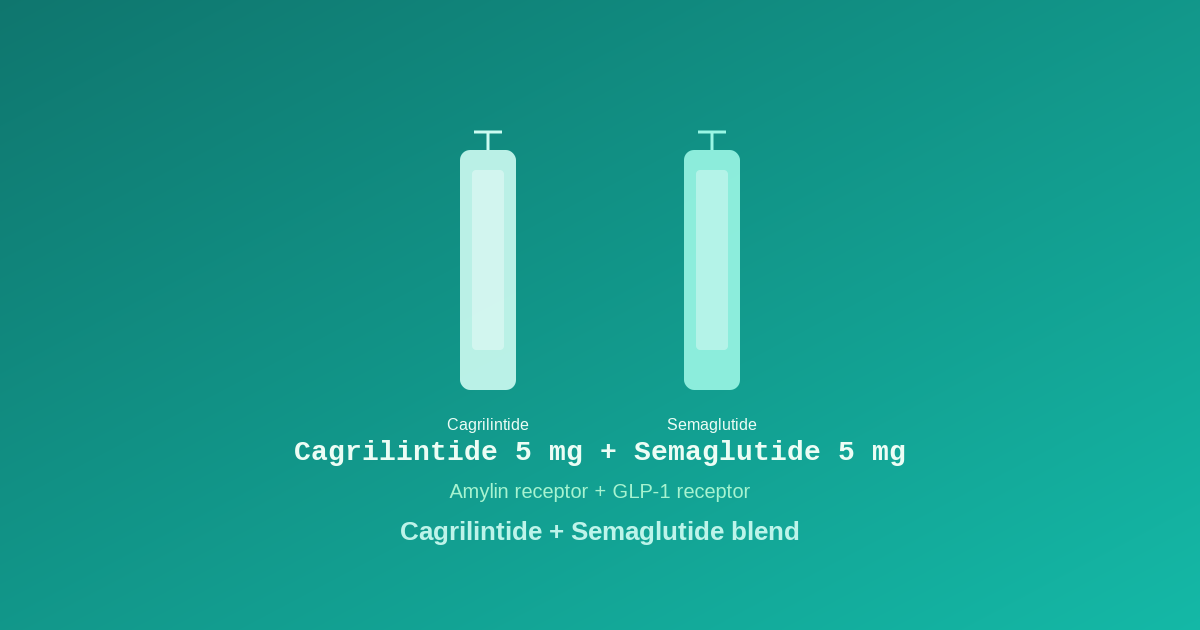
The catalogue blend is cagrilintide 5 mg + semaglutide 5 mg. How to treat that fill as two receptor programmes — not one “combo dose” — in amylin-receptor and GLP-1-receptor cell assays.
A plain-language guide to testing retatrutide, a research peptide that targets three receptors at once — how to set up dose ranges, comparison peptides, and 5–60 mg catalogue vials.
Design dual-incretin experiments with tirzepatide — receptor-expression checks, antagonist splits, plate layouts, and 5–120 mg lyophilised vials for cell-based GIP/GLP-1 work.
Why semaglutide’s C18 fatty-diacid chain changes cell-culture behaviour — albumin binding, plastic adsorption, no-vortex reconstitution, and 5–30 mg research vials.
BPC-157 as a 15-residue research peptide for fibroblast, HUVEC, and tube-formation assays — not a clinical repair claim. 5 mg and 10 mg vials, Janoshik COAs.
Separate TB-500 catalogue names from full-length thymosin β4 — then run actin, scratch, and transwell migration assays with 5 mg and 10 mg lyophilised vials.
How the two catalogue BPC/TB vials (5 mg + 5 mg and 10 mg + 10 mg) support four-arm in-vitro migration and endothelial assays — without treating 1:1 mass as 1:1 moles.
Why GHK-Cu is a Cu(II) complex rather than a plain tripeptide — pH window, media chelators, visual QC, and the 50 mg / 100 mg vial maths for cell assays.
The catalogue blend is CJC-1295 5 mg + ipamorelin 5 mg (no-DAC analogue). How that vial maps onto GHRH-R and GHS-R1a cell assays — and how it differs from CJC with DAC sold separately.
Catalogue Glow is TB-500 10 mg + BPC-157 10 mg + GHK-Cu 50 mg. How to test that vial against a matched GHK-Cu-only arm in fibroblast, keratinocyte, and organotypic assays.
Canonical guide to the Klow vial — TB-500 10 mg + BPC-157 10 mg + GHK-Cu 50 mg + KPV 10 mg — and how to choose it against Glow, BPC/TB, and single-peptide controls.
How C2C12 and HepG2 labs set MOTS-c concentrations for OCR, ATP, and AMPK work — 10/20/40 mg vials, why A280 is a weak check, and what the Janoshik COA actually tells you.
NAD+ is a dinucleotide coenzyme, not a peptide. 100/500/1000 mg vials, millimolar arithmetic (MW ~663), and a light-protection SOP for short-lived aqueous stocks.

SH-SY5Y BDNF work and BV-2 cytokine panels are not interchangeable. How to keep Semax and Selank stocks, 5/10 mg vials, and combination plates from contaminating each other’s endpoints.
How to use 10 mg and 50 mg Epitalon vials in fibroblast SA-β-gal and telomerase-activity plates — marker language only, with the TRAP-assay limits most write-ups skip.
How to size a Peptides X10 order from assay consumption, why ten vials is the default SKU, and how to add processing, Priority Tracked DHL/UPS, and customs into lead time.
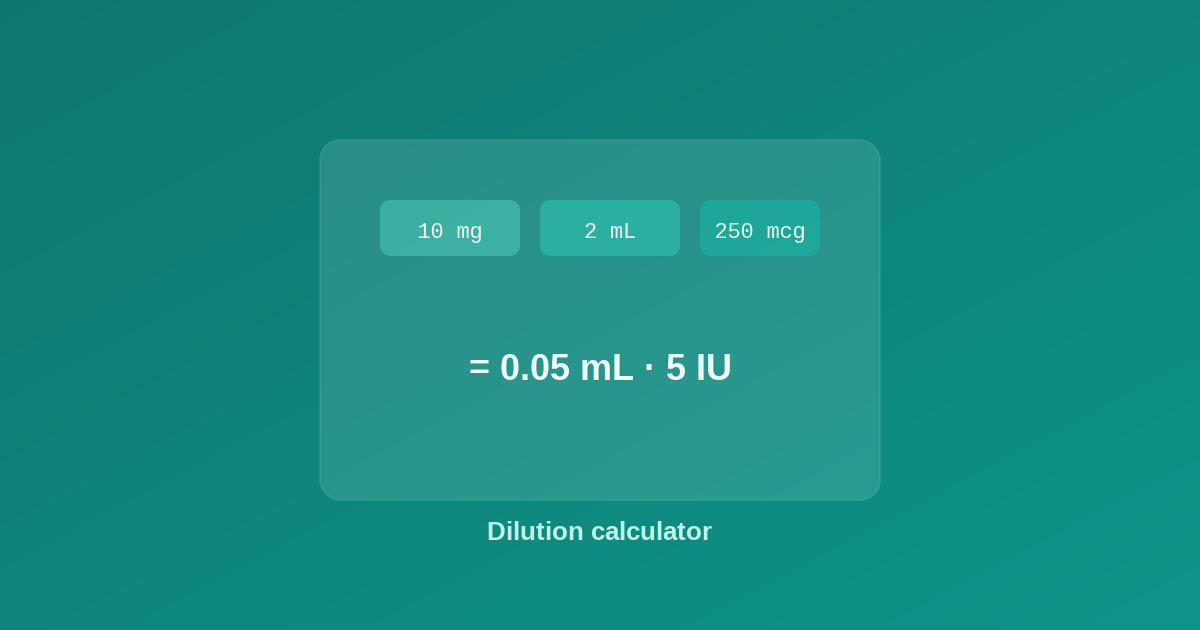
Three bench calculations — MOTS-c, Semax, and NAD+ — from labelled milligrams to nanomolar or micromolar medium, using micropipettes, not injection syringes.
How research labs interpret HPLC purity, distinguish identity from purity, read blend chromatograms, and match a vial lot to a Janoshik report before accepting material.
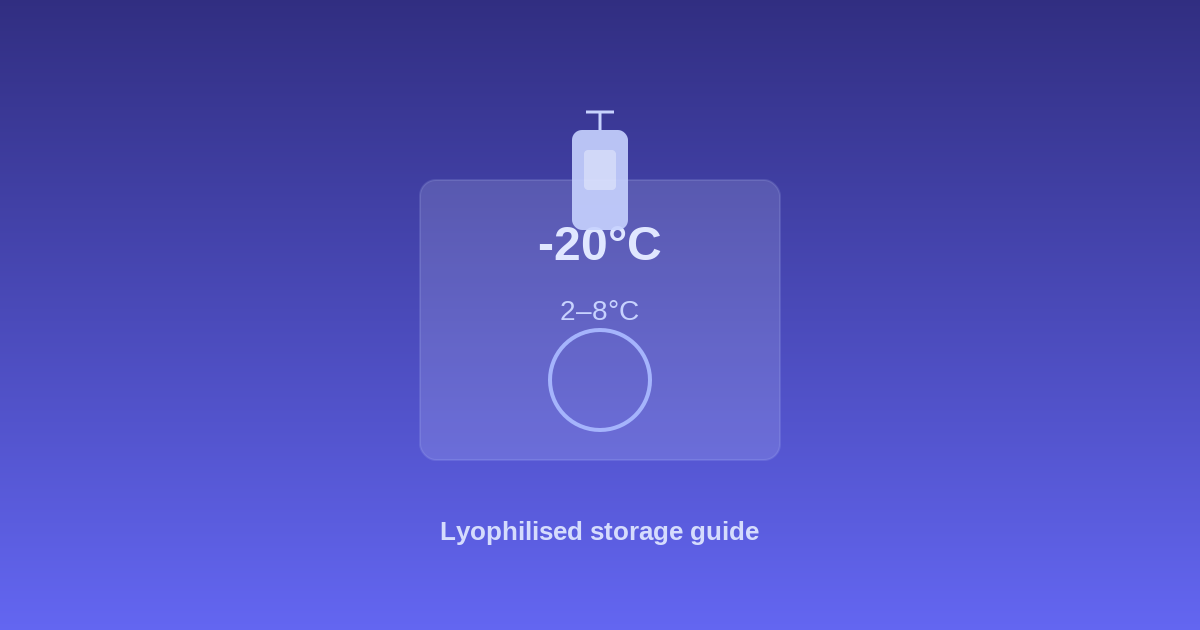
Why lyophilised peptides ship at ambient temperature, how freezer storage differs from transit, and hold-time guidance for sealed versus reconstituted vials in 10-vial packs.
A scannable laboratory checklist for reconstituting lyophilised peptides — no vortex as default, required label fields, and how to run a 10-vial reconstitution day.
What checkout's Priority Tracked Shipping — DHL/UPS includes: ambient lyophilised transit, signature delivery, customs and duties, regional ETA estimates, and the receipt-to-freezer SOP.